Your Selected Vehicle
Parts for your 2003 Honda Cr-v-Sway bars & links


Explore 4WD & Adventure

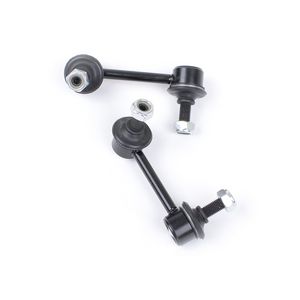


Maintaining and Replacing Sway Bars & Links on Your 2003 Honda CR-V
When it comes to keeping your 2003 Honda CR-V in optimal condition, paying attention to the suspension components, such as sway bars and links, is essential. Sway bars (also known as anti-roll bars) and links serve a crucial role in maintaining stability and reducing body roll during turns. These components are fitted to your vehicle and play a vital part in the driving experience, so it's important to ensure they're in good working order.
If you're noticing unusual noises, poor handling, or a general instability while driving your CR-V, it might be time to consider inspecting and possibly replacing the sway bars and links. Below, we'll delve into the particulars of maintaining these parts.
Understanding the Role of Sway Bars & Links
Your CR-V's sway bars connect the left and right wheels, distributing the force exerted when turning and thereby minimising body lean. They enhance traction and provide more precise steering feedback. The links, which attach the sway bar to the suspension, are equally important. If they become worn or damaged, the effectiveness of the sway bar can be significantly compromised.
Signs of Wear and Tear
As with any mechanical component, sway bars and links are subject to wear and tear. Here are a few signs that indicate they might need attention:
- Clunking or rattling noises, especially when going over bumps or making turns.
- Excessive body roll or sway when navigating around corners.
- Uneven tyre wear due to improper suspension functioning.
- Unusual steering response or feeling less controlled while driving.
Steps to Replace Sway Bars & Links
- Secure the Vehicle: Begin by parking your CR-V on a level surface and ensuring it's securely supported with jack stands. Safety is paramount, so do not skip this step.
- Remove the Wheels: This gives you better access to the suspension components.
- Identify the Sway Bars and Links: Locate the sway bar, which runs parallel to the axle, and the links that connect it to the suspension.
- Inspect for Damage: Before removal, check the existing sway bar and links for visible damage or wear. This will also help confirm the need for replacement.
- Remove the Links: Using a wrench and possibly a pair of pliers, unscrew and remove the old links from the sway bar and suspension.
- Install New Links: Align the new links and secure them tightly. It's crucial to ensure a firm fit without over-tightening, as this can damage the components or threads.
- Reattach the Wheels: Once the new links are in place, put the wheels back on and lower your vehicle.
- Test Drive: Finally, take your CR-V for a short drive to ensure the new components are functioning correctly.
Routine Maintenance Tips
To prolong the life of your sway bars and links, consider performing regular inspections every few months. Pay close attention at each service interval and look out for any signs of wear. Additionally, replacing components in pairs helps maintain balance and uniformity in vehicle handling. Keeping your tyres properly inflated can also reduce excess stress on these components.
While replacing sway bars and links might seem daunting, it can usually be tackled with some basic tools and a little patience. However, if you're unsure about tackling this maintenance yourself, seeking professional help is always a good idea. They can provide a more thorough inspection and ensure everything is up to standard.
Remember, taking care of your 2003 Honda CR-V's sway bars and links is key to ensuring a smooth, stable, and safe driving experience. Keeping them in top shape not only enhances handling and performance but also contributes to the overall longevity of your trusty CR-V.


