Your Selected Vehicle
Parts for your 2003 Ford Fiesta-Batteries



30%OFF
Drivetech 4x4 OE Style Switch UHF RJ45 Socket, Suits Toyota and Mitsubishi - DT-11105
$32.20
$46

30%OFF
Drivetech 4x4 OE Style Push Button Switch Driving Lights, Suits Toyota and Mitsubishi - DT-11002
$23.10
$33


30%OFF
Drivetech 4x4 OE Style Push Button Switch Lightbar, Suits Toyota and Mitsubishi - DT-11081
$23.10
$33

30%OFF
Drivetech 4x4 OE Style Push Button Switch Aux Lights Symbol Suits Toyota and Mitsubishi - DT-11078
$23.10
$33


30%OFF
Drivetech 4x4 Dual USB Socket 2.1A Per USB - Panel Mount with Voltmeter - DT-11025
$37.80
$54

30%OFF
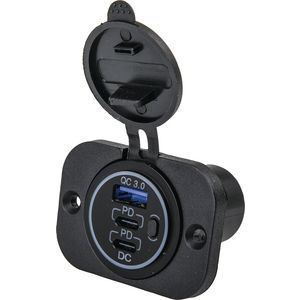
Drivetech 4x4 QC3.0 Quick Charge USB, Type-C Port and Voltage Display Power Socket - DT-17103
$30.80
$44

30%OFF
Drivetech 4x4 Rocker Fog Lights Switch On/Off SPST 12 or 24V Blue Illumination (Contacts Rated 20A @ 12V) - DT-11020
$21.70
$31


30%OFF
Drivetech 4x4 OE Style Push Button Switch Roof Lights, Suits Toyota and Mitsubishi - DT-11082
$23.10
$33

30%OFF
Drivetech 4x4 Rocker Driving Lights Switch On/Off SPST 12 or 24V Blue Illumination (Contacts Rated 20A @ 12V) - DT-11008
$21.70
$31


30%OFF
Drivetech 4x4 OE Style Push Button Switch Aux Lights Symbol Suits Toyota - DT-11019
$26.60
$38

30%OFF
Drivetech 4x4 Rocker Winch Switch Mom On/Off Mom On SPDT 12 or 24V Blue Illuminated (Contacts Rated 20A @ 12V) - DT-11007
$30.10
$43


30%OFF
Drivetech 4x4 Rocker 4 Switch Panel On - Off - SPST 12 or 24V Blue Illumination (Contacts Rated 20A @ 12V) - DT-11030
$105
$150


30%OFF
Drivetech 4x4 OE Style Push Button Switch Beacon, Suits Toyota and Mitsubishi - DT-11077
$23.10
$33


30%OFF
Drivetech 4x4 Rocker Beacon Switch On/Off SPST 12 or 24V Blue Illumination (Contacts Rated 20A @ 12V) - DT-11012
$21.70
$31

30%OFF
Drivetech 4x4 OE Style Push Button Switch Auxiliary Lights, Suits Holden and Isuzu - DT-11086
$26.60
$38

30%OFF
Drivetech 4x4 Rocker AUX Lights Switch On/Off SPST 12 or 24V Blue Illumination (Contacts Rated 20A @ 12V) - DT-11013
$21.70
$31


Product added to cart
2003 Ford Fiesta batteries — what they do and how to look after them
Technical sources including the Ford Fiesta 2002–2008 Owner’s Manual, Ford service information (ETIS/TIS), and common repair guides (e.g., Haynes) confirm the 2003 Ford Fiesta is fitted with a 12‑volt lead‑acid starter battery. So yes, a battery is very much relevant to this model.
In the 2003 Fiesta, the battery’s job is to crank the engine, stabilise voltage for the ECU and safety systems, and power lights, locks, and accessories with the engine off. Once running, the alternator takes over and keeps the battery topped up. There’s no factory stop‑start on this year, so the battery’s primary stress is cold cranking, short trips, and accessory loads.
For most 2003 Fiesta variants, a compact European‑style 12 V battery with roughly 40–60 Ah capacity and 330–540 CCA is typical. Terminal layout and hold‑down style must match the tray. AGM units can be used if desired, but a quality flooded (maintenance‑free) battery is standard. Always confirm exact size and spec in the owner’s manual or a reputable fitment guide.
Good servicing practice is simple and pays off:
- Test annually or at every service: open‑circuit voltage, conductance/load test, and a charging‑system check (aim ~13.8–14.7 V at idle with accessories off).
- Keep terminals clean and tight, neutralise any corrosion and use a light smear of dielectric grease.
- Ensure the hold‑down clamp is snug so the battery can’t move over rough roads.
- If the case is serviceable (many aren’t), only top up with distilled water, otherwise, don’t remove caps.
Replacement tips that save headaches:
- Save settings with a memory saver if possible, some Fiesta radios need a security code after power loss.
- Switch off ignition, then disconnect negative first, positive second. Fit the new unit positive first, negative last.
- Clean the tray, check earth straps, and reset one‑touch windows or idle learn if needed after reconnection.
- Take the old battery for proper recycling—don’t bin it.
Signs it’s time include slow cranking, dim lights at idle, or repeated jump‑starts. Most batteries last 4–6 years in Aussie and Kiwi conditions, but lots of short trips or extreme temps can shorten that. If the charge warning lamp comes on while driving, that points more to the alternator or belt than the battery—get the charging system checked.
Technical sources referenced: Ford Fiesta Owner’s Manual (2002–2008), Ford ETIS/TIS service data, Haynes Repair Manual for Ford Fiesta (applicable years), and major battery application catalogues used by workshops.
Popular questions about 2003 Ford Fiesta batteries
What battery type suits a 2003 Ford Fiesta?
A 12 V lead‑acid starter battery is correct—usually a compact European case with around 40–60 Ah and 330–540 CCA. A quality maintenance‑free flooded battery is fine, AGM is optional if extra durability or accessory load is expected. Match the physical size, terminal position, and hold‑down style shown in the owner’s manual or a trusted fitment guide.
How long should the battery last?
Expect roughly 4–6 years. Heat, short urban trips, and high accessory use can shave time off. If cranking slows, the battery needs frequent jumps, or test results are borderline, plan a replacement before it strands the driver.
The battery light came on while driving—does that mean the battery’s bad?
Not necessarily. The charge lamp usually points to a charging issue—alternator output, drive belt, wiring, or grounds. The battery may have been drained as a symptom. Have the charging system and battery tested together to pinpoint the cause.
Popular Searches


