Choosing the right driving lights for your 4WD
13th Apr 2025 | 5 minutes to read
Driving lights are a crucial component for any 4WD enthusiast who hits the outdoors after dark. Yet, with the variety of options, selecting the right lights can be daunting.
Here we'll tackle some common myths and misconceptions and provide real advice to help you choose the right lights for your rig:
Myth 1: Driving Lights Must Be Round
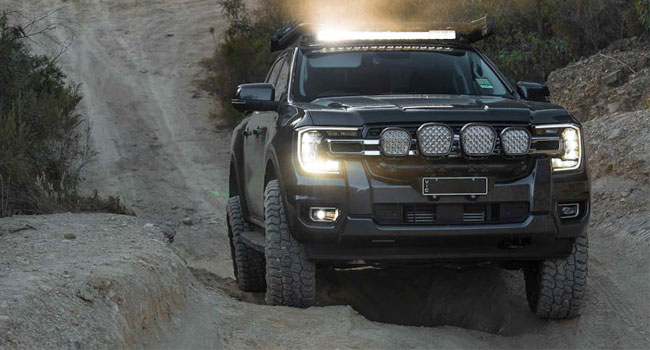
Contrary to what you always see, driving lights do not need to be round to be effective. With advancements in LED technology, driving lights can now be designed in many shapes without compromising on effectiveness; with some designs like the STEDI Type-X EVO range being more efficient in shape versus output.
Each LED functions like a mini light, equipped with its own reflector, allowing for flexible arrangements in shapes such as the STEDI EVO silhouette, classic round Type-X Sport and Type-X Pro range, the square Quad Pro, or light bars. These lights can offer both spot reflectors for distance and flood reflectors for a wider spread, making them suitable for any application you may need for your 4WD's use.
Myth 2: You Need the Longest Distance Possible

While some manufacturers flex the extreme distances their lights can reach, practical driving conditions rarely suit these capabilities. The typical range for most drivers is about 500 meters, which is plenty of distance for spotting kangaroos or obstacles in time to react safely.
The key is to find the perfect balance between distance and spread for your style of driving — do you often drive on long, straight roads, or do you drive in conditions where flooding the road in light is better?
Myth 3: All LED Lights Are of Equal Quality

Unsurprisingly, LED lights vary significantly in quality, largely based on the grade of LEDs used in their production. High-quality LEDs are the key for performance, longevity, and durability. Lower-grade LEDs may offer initial brightness, but they falter in longevity and effectiveness and may fail you when you need them most.
When choosing lights, it's crucial to consider the colour rendering index (CRI), which affects how colours and details are seen in different driving applications, as well as affecting how tired your eyes get. STEDI not only nails the best whiteness output, but they also offer coloured lenses to suit what you may prefer.
Myth 4: Good Lights Are Expensive and Cheap Lights Are Ineffective
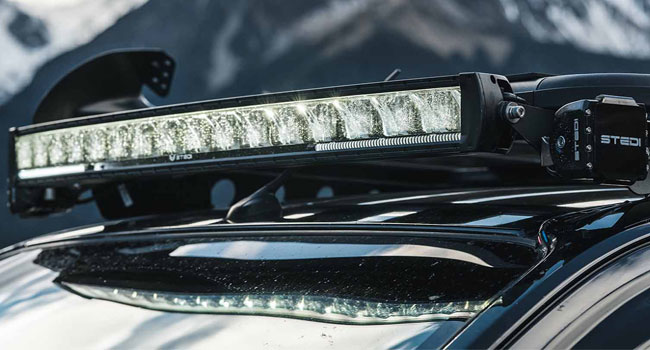
While it's true that high-end driving lights are an investment, not all affordable lights are bad. The challenge is to find lights that nail quality, build, and price. Look out for features like an IP68 rating, which proves strong water and dust resistance, a necessity for lights in any 4WD application.
Myth 5: Installation Requires a Professional

Modern driving lights are extremely user-friendly, with almost all lights featuring plug-and-play installation kits that any level of DIYer can handle. These kits include your harness, switches, and sometimes, vehicle-specific features. Of course, if you aren't comfortable with electrical installations, it won't be an expensive job to have a professional handle.
The Verdict

Getting the right driving lights — or combination of spotties and light bars — involves understanding the lights themselves and which ones will suit your needs. By focusing on the quality of components, the design, and the balance between distance and spread, you can perfect your nighttime driving experience safely and effectively.