4WD Suspension Lift Guide
9th Apr 2025 | 8 minutes to read
Ever wondered what size lift you should run on your 4WD? Should you lift your 4WD more than 2 inches? We worked with the experts at Fulcrum Suspension to reveal how to lift your 4WD suspension the right way!
Find out how to choose the right size lift for your 4WD, how to get more flex, the differences between live axle and IFS, and what to avoid when lifting:
Why Lift Your 4WD?

The reason you would fit a lift, either 2 inches or greater, to your 4WD is to create more ground clearance under the chassis to climb over obstacles on the tracks. Most importantly, bigger suspension lifts create more clearance between the body of your 4WD and tyres to allow the fitment of larger tyres — which then provide even more ground clearance and give your rubber a greater footprint for better off-road traction.
Bigger suspension lifts and tyres also create better approach angles, ramp-over angles, and departure angles to reduce the likelihood of vehicle damage and make your 4WD more capable of handling tough scenarios.
Suspension Lifts Bigger Than 2 Inches
Obviously, the greater the lift, the greater the clearance and room for bigger tyres, but you need to consider the legalities and engineering laws/costs that come with a 4” lift and massive mud tyres. Depending on your state laws, certain lifts and tyre sizes are illegal depending on your vehicle, and you will need to consider the costs for engineer-modified certification for your 4WD to be road legal.
When lifting your 4WD more than 2 inches, you will also lose a considerable amount of on-road handling capabilities and comfort, not to mention the power loss your 4WD suffers when trying to push tyres 35” or bigger.

Live Axle vs Independent Front Suspension (IFS)
Live axle and independent front suspension (IFS) are two common setups in 4WDs, and each have advantages and disadvantages.
Live Axles
Live axles provide greater wheel travel and flex, making them ideal for tackling tough off-road tracks where maintaining traction is crucial. They are simpler, more durable, and better suited for heavy-duty applications.
Independent Front Suspension (IFS)
In contrast, IFS offers superior on-road comfort and handling, as it allows each wheel to move independently, reducing the impact of bumps on the vehicle. While IFS is excellent for touring and light off-roading, it has less flex and durability compared to live axles, making it less capable on extreme terrain.
Live Axle 4WDs
The front suspension setup of a live/solid axle 4WD consists of three main components: shock absorbers, a panhard rod, and radius arms. Common solid axle 4WDs are older LandCruisers and Patrols (60, 70, 80 series), older Utes, and even the new model Suzuki Jimny. Live axle 4WDs have greater wheel travel/flex than IFS vehicles because of the length of their front arms, allowing much better up-and-down travel in your suspension, which gives you greater traction on rutted 4WD tracks.

Radius Arms
When you lift the suspension of a solid axle 4WD, you increase the angle on the front radius arm. When the angle of these arms is changed, it makes it harder for your 4WD’s suspension to move through its range of motion properly. You want the angle to be as flat as possible for when you hit bumps, so the suspension isn’t “fighting” with your vehicle.
Caster Angle
Lifting your live axle 4WD reduces your caster angle, which gives less front tyre grip in turns, less control through the steering, and less steering feel. You can either use an offset caster correction bush as a cheaper fix to this issue or replace the arm with a lift-corrected arm with a centred bush.
As the panhard rod angle changes with a suspension lift, everything is physically pulled to one side — including the diff — and this can be fixed with an adjustable panhard rod. This movement is quite small in a 2-inch lift and would still benefit from being fixed, but this movement is significant when lifted greater than 2 inches and needs to be addressed with the installation of the adjustable panhard rod. This is the same for both the front and rear of the 4WD.
Tail Shaft
Another thing to check when lifting a solid axle 4WD is that the prop shaft moves to a different angle, which can later cause vibrations and wear. Also, ensure the tail shaft doesn’t bind on anything. For example, in Patrols, the tail shaft can bind on a crossmember when lifted 2 inches. This can be fixed by flipping the shaft upside down, but the crossmember will need a professional to notch the crossmember when lifting 4 inches.

Sway Bar Links
An important thing to consider when lifting your 4WD is adding an adjustable sway bar link or at least an extended link. Without doing so, stock sway bar links can bind and break, reducing the amount of wheel travel in your 4WD.
IFS 4WDs
The front suspension of an Independent Front Suspension 4WD consists of three main components: shock absorbers, CV (constant velocity) joints, and lower control arms. Typical IFS 4WDs include modern dual-cab Utes and new 4WD wagons like a Nissan Y62 Patrol.

With IFS 4WDs, you would only really want to lift your rig 40-50mm (approx. 2 inches), as the greater the lift, the worse the angle created for your control arms. This will either lead to regular breakages or require extreme upgrades to avoid issues. Lift kits for IFS 4WDs larger than 2” will upset your suspension geometry and wheel alignment.
These larger suspension lifts put the control arms and CV joints at bad angles, and correcting this involves relocating your differential and moving suspension pickup points, which is more work than it’s worth. Unless your dream rig is a 4-inch+ lifted Hilux, and you are aware of the costs and issues ahead, we recommend getting a solid axle 4WD instead.

Why Choose IFS?
IFS 4WDs are much more comfortable when it comes to road handling, as if one tyre hits a bump, it will not affect the other wheel. They are typically better touring 4x4s if you aren’t someone who wants to tackle every hard track you see, as they are much more comfortable to drive, but slightly less capable on tough tracks.
Brake Upgrades
When lifting your 4WD over 2 inches, you will also need extended brake lines in order to avoid your standard lines stretching or tearing off as your higher suspension flexes and breaks them. You will need to adjust the rear brake proportioning valve, although this is less important on vehicles with ABS.
Bigger Lift Cost Considerations
If you plan on going higher than a standard 2-inch lift, every inch you increase will cost you close to an extra $1,000. This is a considerable amount of money and time needed just to add a little bit of extra lift, when you can use that money on other mods — for either camping comfort or 4WD capabilities.
How to Get More Wheel Travel/Flex
More flex in your 4WD means you will keep your tyres on the ground more often, ultimately leading to more traction and off-road capability.
Some things that can limit your flex include:
- Shock lengths
- Sway bars
- Link arms
- Brake line length
The big limitation in the front end of your vehicle is that your bushes are fighting against each other when the front axle flexes, which means you need to upgrade your bushes in your front radius arms. The rear of the vehicle naturally flexes better than the front.
Choosing the Right Springs
Choosing the right coil springs for your 4WD is important for on-road rideability, weight-carrying comfort, and off-road performance. There are essentially two types of springs: linear springs or progressive springs. You can talk to a suspension expert if you are unsure of which spring style will best suit your application. Modern springs, especially upgraded 4WD-specific branded springs, are built with much better-quality materials and are far less likely to sag with age, wear, and when overloaded.

Linear Suspension Spring
A linear spring means that the thickness and spacing of the spring stay the same throughout the whole spring. These types of springs are good at carrying one weight and are typically found in the front of a vehicle, as they will only ever carry the weight of a bull bar, a winch, and the engine, and this weight rarely changes much.
Progressive Rated Suspension Spring
Progressive springs have thicknesses that change throughout the spring, and the coil spacing is closer together in certain parts for load-carrying variability. As you load these springs up with weight, the load will be distributed better throughout this style of spring.
Spring Ratings
Make sure you purchase the right-rated springs that suit your setup. For your front springs, look up the weight of your brand’s bull bar and winch if you have them installed, and take into consideration if you have other bull bar accessories or even a dual battery in the engine bay. For the rear of your vehicle, consider what you always carry or plan to carry on your trips. This may include a rear dual-battery system, a fridge, water tanks, drawers, tools, and much more. Try adding up this weight as best as you can and purchase the most suitable springs.
Shock Absorbers
Upgrading your shock absorbers is essential to ensuring the internal temperatures of the shock stay down and get a longer life. Upgrading to bigger shock absorbers allows for a larger piston, holds more oil, and gives you confidence that they will handle the weight and wear that big 4WDs create.
What Size Lift Should You Choose?
Most 4WDs can easily travel all around Australia and drive the harshest tracks with a 2-inch lift – with properly rated springs – and larger tyres to fit the extra room in the wheel arch created by the suspension lift. This is a legal, cost-effective, and best ride comfort option for 95% of 4WDers and tourers. If you want to go more than 2 inches in your lift, you need to be prepared for the multitude of things to consider: from engineering, legalities, and cost to the comfort of your ride. Be realistic with your budget and how you will actually drive the vehicle.
The 4WD Expert Opinions
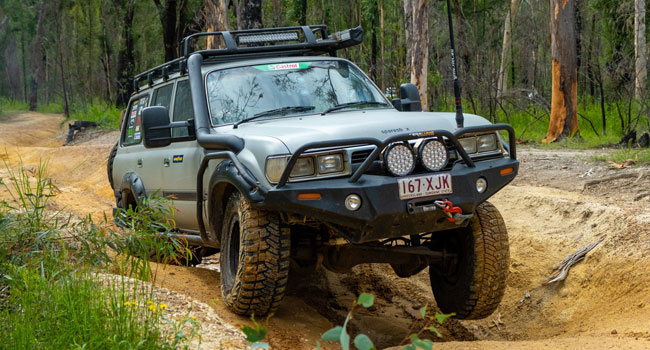
Jocko: His main rock-crawler, solid axle-swapped Hilux has a 4-inch lift but is always used to tackle the hardest tracks in Australia. This lift allowed for much bigger tyres and improved its off-road capability, but negatively affected its on-road performance and comfort. Jocko also has a few other 4WDs with only 2-inch lifts that handle better on-road.
Shauno: Try to fit the biggest-sized tyres you can with the smallest amount of lift. Your on-road handling will be better, and your centre of gravity off-road is lower, which is better for comfort and traction. Shauno lowered his 80 Series’ suspension, Sooty, from a 4-inch lift on 35” tyres down to a 3-inch lift, and the on-road handling improved without noticeably compromising its off-road performance.
Graham: In both his D-Max and his Y62, Graham has only installed a 2-inch lift while fitting the biggest possible tyres and has shown that his D-Max can go anywhere in Australia, and his Y62 can handle towing and off-grid living with ease and comfort on some of the roughest dirt roads and tracks in WA.